
2026 Seasonal Media Briefing Guide
Introduction
Welcome, from those who grow and know
The 2026 Christmas season is just around the corner. Getting ready to cover Christmas trees? Whether it’s your first time, or you look forward to covering every year, we’re here to help by providing you with fresh data, story ideas, expert interviews, important context, and more.
The following pages include a seasonal outlook straight from growers, industry facts, info on spokespeople, and downloadable video clips.
Still not finding what you’re looking for or have additional questions?
Please reach us at [email protected].
2026 Season Outlook
What wholesale growers are saying
In August, the Real Christmas Tree Board conducted its annual wholesale grower survey1 for the latest perspectives on input costs, supply, trends, and forecasts. For those covering and interested in the business outlook for real Christmas trees, here are key findings about the 2026 season.
91% of growers surveyed said they don’t plan to raise their wholesale prices, including those who may lower them. That’s up from 84% who said the same thing last year. The price that a consumer will pay varies and is set by retailers. While the Real Christmas Tree Board is unable to provide the average cost of a tree, in a 2025 holiday consumer survey, 91% of respondents who purchased a real Christmas tree said the price they paid was worth it and 56% said the price they paid was less than they expected.2
Nearly 8 in 10 growers expect to sell the same number of trees or more compared to last year. Demand for real Christmas trees is expected to remain steady in 2026.
85% of growers categorized this year’s supply as strong to very strong. There’s a real Christmas tree for everyone who wants one. The industry didn’t run out of trees last year or any year before that.
Like last year, shoppers can expect to conveniently find a tree they love. 91% of survey respondents said they had no issues locating a place nearby to purchase a tree and 95% said they found a tree they loved.2
Ongoing year-over-year increases in input costs are being absorbed vs. passed along to retailers.
1 About the Grower Survey: The Real Christmas Tree Board, in conjunction with FleishmanHillard, fielded a survey of 47 wholesale growers of real Christmas trees across the U.S. Each of the responding growers conducts business in one or more of the following regions: Northwest, West, Southwest, Mid-West, Northeast, Mid-Atlantic, and Southeast. Combined, the respondents supply half-to-two-thirds of the country’s real Christmas trees. The survey was fielded in August 2026; last year, the survey was fielded among 43 wholesale growers in August 2025.
2 About the Post-Season Consumer Survey: TRUE Global Intelligence (TGI), the in-house research practice of FleishmanHillard, fielded a survey of 1,500 Americans adults ages 21 to 54 years. All survey respondents either celebrate/observe Christmas or Noche Buena or display a Christmas tree. Respondents were required to either decide or share in the decision of what Christmas tree to put up in their home each year. The survey was fielded from December 26, 2025 to January 7, 2026. The survey has a margin of error of ±4.8% for respondents who purchased a real Christmas tree in 2025.
Industry Insights
If You’re New To Covering Christmas Trees
You’re bound to uncover a lot of real Christmas tree information as you research and put together stories this season. We want to provide helpful context and background to ensure you have what’s most accurate.
Know Your Sources
They’re not all created equal. Trust those who grow and know.
The Real Christmas Tree Board (RCTB) is the media’s expert resource for insights about farm-grown Christmas trees. Chartered in 2015 as the Christmas Tree Promotion Board and renamed in 2022, it is a national research and promotion program whose mission is to share the benefits of fresh Christmas trees with consumers through promotion and public relations, while engaging in research to better serve customers and growers. The USDA provides oversight of the RCTB to ensure transparency, accuracy, and fairness in its communications. The RCTB provides the media and public with accurate information, added insights, and the latest news and inspiration for the season. It represents real Christmas trees sold in the United States and is supported through annual assessments paid by any business growing or importing 500 or more real Christmas trees.
National Christmas Tree Association (NCTA), founded in 1955, is the national trade association and advocacy organization for the farm-grown Christmas tree industry, leading its public policy/governmental affairs and serving as the “voice of the industry.” NCTA represents hundreds of active member farms, 38 state and regional associations, and thousands of affiliated businesses that grow and sell Christmas trees or provide related services. Each year since 1966, an NCTA member has presented the official White House Christmas tree to the First Lady, which is displayed in the Blue Room. NCTA is also a trusted media resource on farm-grown Christmas trees.
Please Note …
American Christmas Tree Association (ACTA) does not represent real Christmas trees or growers. It is a 501(c)(3) corporation established in 2009 and has no known members representing the real Christmas tree industry. Thomas Harman1 is CEO of ACTA and is also the founder and CEO of Balsam Hill, a seller of artificial Christmas trees.2 The majority of artificial Christmas trees are manufactured overseas.3
1https://apps.irs.gov/pub/epostcard/cor/352342528_201912_990EO_2021042017972245.pdf
2https://www.balsamhill.com/about-us
3Data pulled from the U.S. Census Bureau’s International Trade in Goods and Services report https://usatrade.census.gov
Key Industry Facts
The real Christmas tree industry is complex with important factors to consider.
1. Scale, Scope, and Decentralization
No single retailer, lot, nursery, or farm is reflective of the entire industry.
Real Christmas trees are grown in every U.S. state, and some sold in the U.S. also come from Canada. The largest Christmas tree-producing states are Oregon, North Carolina, and Michigan. Their wide-spread and diverse geographic locations are beneficial to the resilience of the industry overall.
Reports of challenges in any one area can be misleading, in the same way that it would be erroneous to assume that just because a restaurant in your neighborhood is out of fries, other restaurants around the country must also be out of them.
2. Transportation
The real Christmas tree industry doesn’t import product from overseas, but it does rely on freight to move trees from major growing regions, including Canada, to retailers throughout the country.
As with many industries, transportation speed can be affected by isolated supply chain issues and labor shortages.
3. Economic Fluctuations
During the 2008-2011 recession, many Christmas tree growing operations went out of business or retired, triggering a drop in supply. In response, other large growers and new farmers began planting more trees following the recession, which are now starting to become available. Those trees are now reinforcing the total supply.
4. Extreme Weather Events
Extreme heat and drought impacts are challenging for individual growers. But generally, these events are very localized and typically affect only small or vulnerable trees without impacting the overall market.
5. Growing Cycles
It takes eight to 10 years to grow a Christmas tree, depending on the variety and growing location.
It’s possible to “borrow” from future supply for the current year, when necessary.
Industry Truths vs. Common Myths
Context on the stories and misconceptions that tend to go viral but aren’t always accurate.
Real Christmas trees don’t start fires.
No real Christmas tree has ever started a fire. The risk of fire during the holidays comes from things like overloaded electrical circuits or placing heat-generating sources too close to other objects. To keep a tree from falling victim to fire sources, consumers should avoid keeping trees near heat, electricity, and flame. For added protection against ignition sources, shoppers should buy their tree as fresh as possible, add a fresh cut to the trunk and place it in water as soon as possible, then water daily.
Pests and bugs are uncommon.
The beauty of real Christmas trees is that they come from nature, so like with any plant brought into the home, the odds of a bug hitching a ride will never be zero. But shoppers can do a few things to keep out unwelcome visitors: Simply ask the retailer to shake the tree using one of their mechanical shakers, shake the tree outside at home before setting it up, and then vacuum the area around it after setting it up.
Real Christmas trees are a crop grown to be harvested.
Real Christmas trees are grown to be harvested, just like pumpkins for Halloween or vegetables for dinner. There’s no harm in growers cutting them down and consumers taking them home. They are 100% biodegradable and recyclable. For every real Christmas tree growers harvest, they plant at least one new tree.
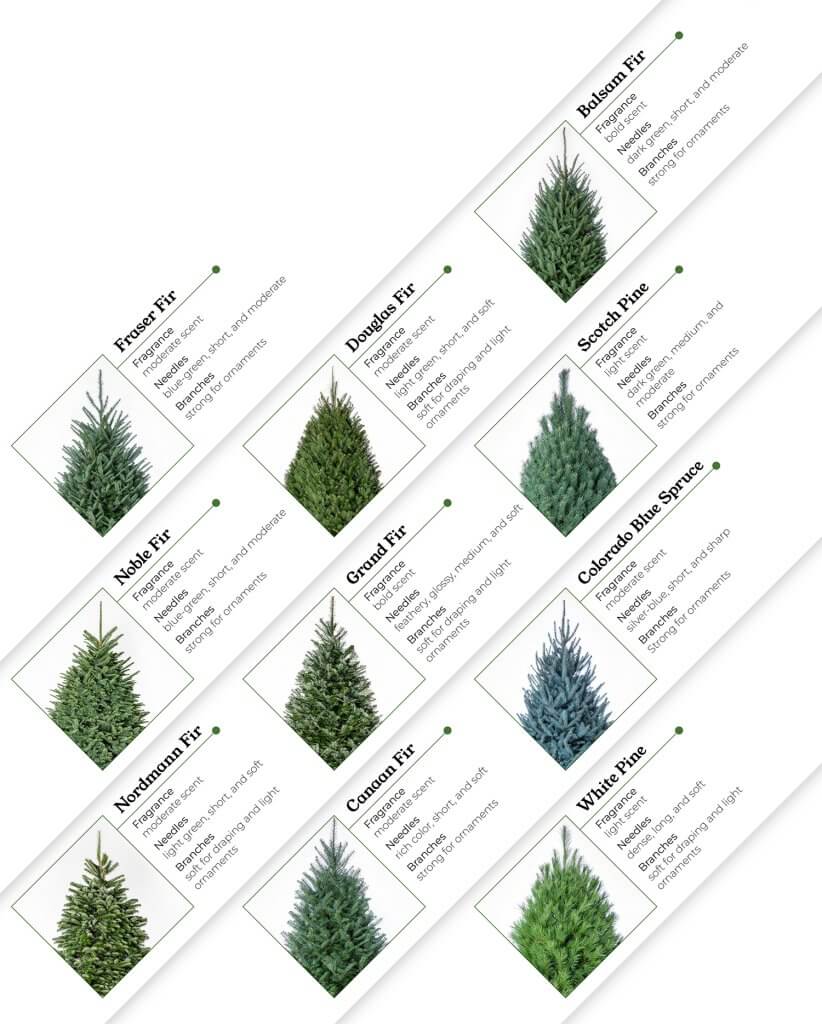
Know Your Trees
A quick primer on different tree types.
There are over 20 species of real Christmas trees that consumers may encounter across the country. More detailed information on all of the different tree species can be found in RCTB’s tree guide and shoppers can use the tree locator to find a real Christmas tree near them.
Spokespeople and Experts
Get the big picture from industry spokespeople and get a tree-level view with on-the-ground growers, including next-generation farmers. The below industry experts are available for interviews. Please let us know if you’d like to connect and we’d be happy to facilitate a discussion.
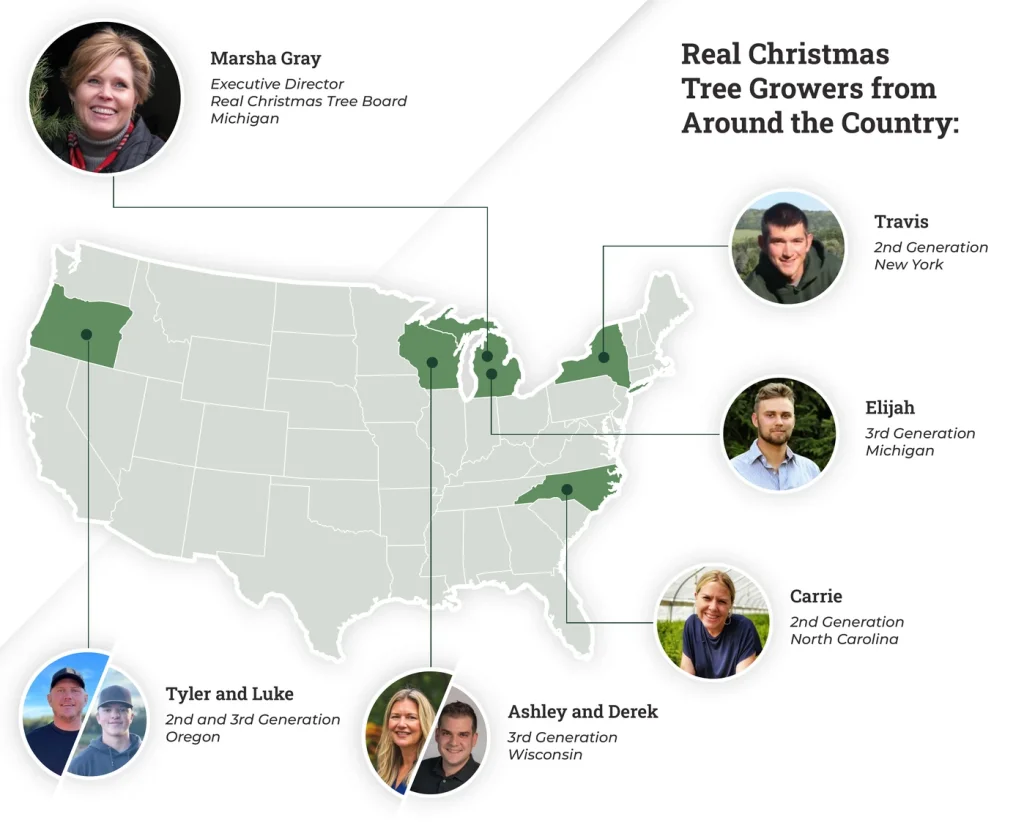
In addition to a deep bench of real Christmas tree growers, we can connect you with leading industry researchers from universities across the country who can lend their expertise to your story.
Bites and B-Roll
Consider these clips and pull quotes a preview of folks you may want to interview or consider them assets ready to use on-air and in-copy when deadlines are tight and editorial expectations are high.
Stay Informed
More Right Now and More to Come
Bookmark the RCTB newsroom hub for easy access to:

Press releases with annual consumer and grower survey findings.

Ready-to-use content and consumer tips to supplement or inspire your coverage.

Fact sheets for quick reference to essential information.

Downloadable assets such as photography and videos.
Download 2026 Briefing and Media GuideComing in October, we’ll share our annual consumer survey with fresh, statistically sound data about shopper moods and ‘tudes for this holiday season.